A grounded route through lagna, houses, dashas, yogas, divisional charts and traditional remedies.
Kundli & Jyotish · 6 min read
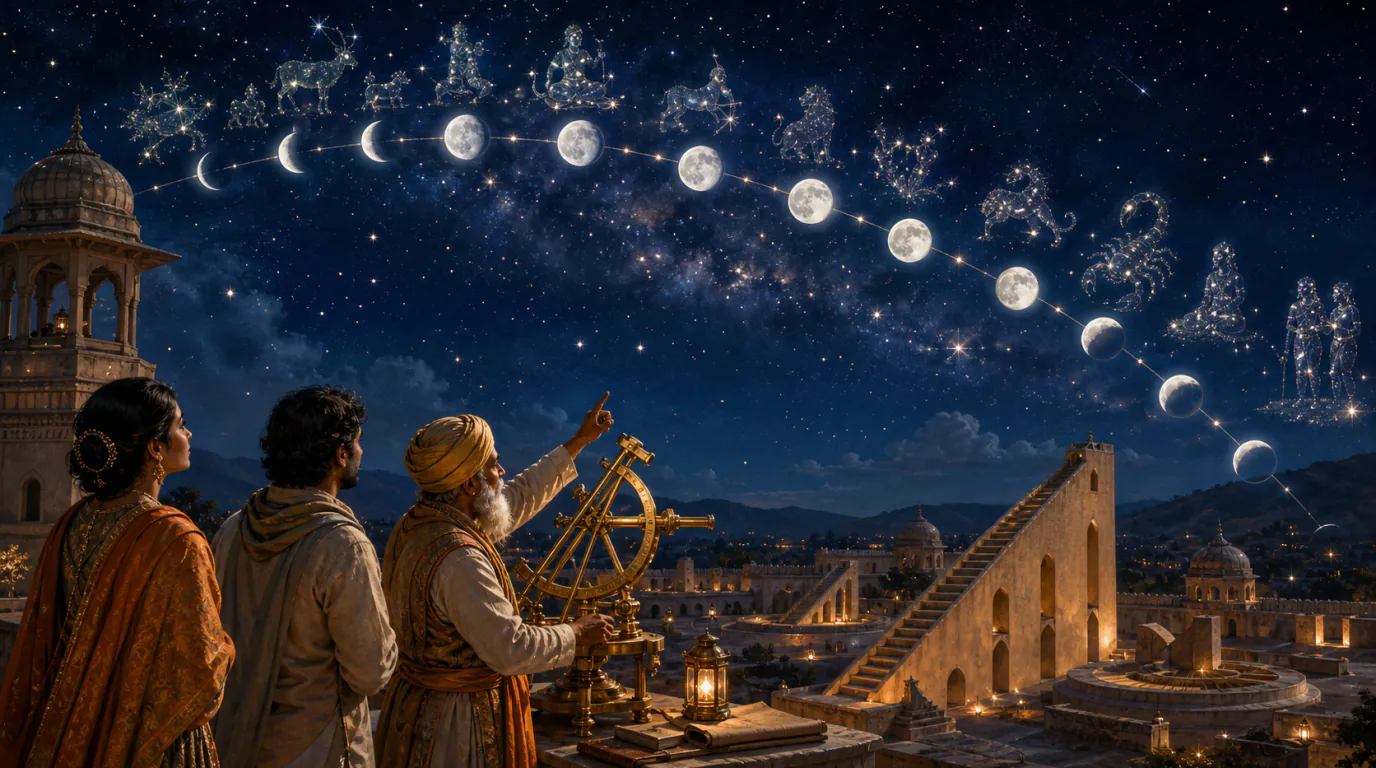
Lagna is the zodiac sign rising at your birth time and place. Learn how it sets up the twelve houses, how to find its ruling planet, and why it must be read with the rest of the chart.
Read guide →
Kundli & Jyotish · 4 min read
A rashi is a 30° slice of the sidereal zodiac, and in Vedic astrology it usually means your Moon sign. Here is what each of the twelve covers and why yours may differ from your Western sign.
Read guide →
Kundli & Jyotish · 4 min read
Houses are the twelve areas of life a birth chart divides into, counted from your ascendant. Here is what each bhava signifies, which are considered strong, and why house systems disagree.
Read guide →
Kundli & Jyotish · 5 min read
Vimshottari dasha divides life into planetary periods totalling 120 years, starting from your birth nakshatra. Here is how the sequence is built, what mahadasha and antardasha mean, and how to read one honestly.
Read guide →
Kundli & Jyotish · 5 min read
A yoga is a named planetary combination. Raj yogas concern status and dhana yogas wealth. Here is how they are formed, why almost everyone has some, and how to read them without overclaiming.
Read guide →
Kundli & Jyotish · 5 min read
The navamsa divides each sign into nine parts, giving a second chart read alongside the birth chart. Here is how D9 is calculated, what vargottama means, and why it dominates marriage analysis.
Read guide →
Kundli & Jyotish · 5 min read
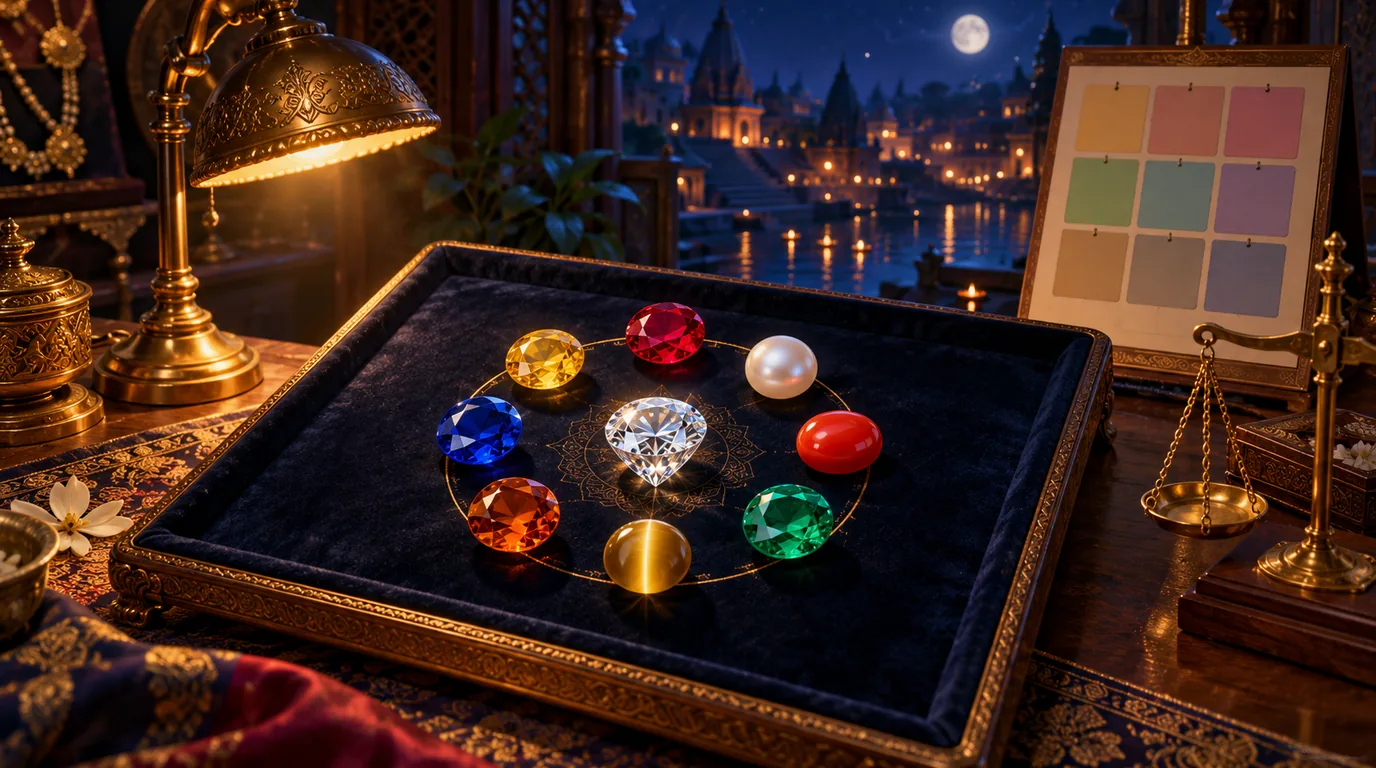
Each graha has a traditional gemstone. Here is the full table, how a proper prescription is supposed to work, why some stones are trialled first, and the specific warning signs of a sales pitch.
Read guide →
Kundli & Jyotish · 5 min read
Mantras are the cheapest remedy in Jyotish and the most defensible. Here are the planetary mantras, how counts and malas work, what research on repetition actually shows, and where the claims overreach.
Read guide →
Kundli & Jyotish · 4 min read
Tara Bala counts from your birth nakshatra to today's to give one of nine favourability categories. Here is how it is calculated, what each tara means, and why it is what makes a muhurta personal.
Read guide →
Kundli & Jyotish · 4 min read
In Jyotish every graha aspects the 7th house from itself, and Mars, Jupiter and Saturn have extra aspects. Here is the full table and why Vedic aspects differ from Western ones.
Read guide →
Kundli & Jyotish · 5 min read
A guide to every free tool on the site: what each one needs from you, what it returns, and which to start with depending on whether you know your birth time.
Read guide →
Kundli & Jyotish · 7 min read
Learn how Sudarshana Chakra reads one house from Lagna, Moon and Sun, how birthday-year progression creates a ten-year forecast, and how to interpret the result without fatalism.
Read guide →
Kundli & Jyotish · 9 min read
Darakaraka is the spouse significator in Jaimini astrology. Among the seven planets from the Sun to Saturn, it is the one with the lowest degree inside its sign, whatever that sign is. It describes how partnership tends to feel in a chart. It does not name a spouse or fix a wedding date.
Read guide →
Kundli & Jyotish · 7 min read
Astrology gives windows for marriage, not a date. A Vedic astrologer reads the promise in the 7th house, its lord, Venus, Jupiter and the Darakaraka, then looks for a Vimshottari dasha period that activates them, and for a time when Jupiter's and Saturn's transits both touch the 7th house. Your own choices still decide the date.
Read guide →
Kundli & Jyotish · 6 min read
No single placement decides love or arranged marriage. Astrologers look for links between the 5th house of romance and the 7th house of marriage, contacts between Venus and Mars, Rahu or Venus in the 7th house, and the same links in the Navamsa (D9). Several together lean towards a self-chosen match; one alone proves nothing.
Read guide →
Kundli & Jyotish · 6 min read
KP astrology (Krishnamurti Paddhati), created by K. S. Krishnamurti, uses Placidus house cusps and judges each matter by the sub-lord of its cusp. Splitting each nakshatra into nine unequal subs in Vimshottari proportions gives 249 divisions of the zodiac. Planets deliver results through ranked significators, timed by the Vimshottari dasha.
Read guide →
Kundli & Jyotish · 7 min read
In Indian folk belief (Shakun Shastra), a twitching right eye is a good sign for men and a reason for care for women; for the left eye it is the other way round. That is tradition, not medicine: most eyelid twitching (myokymia) comes from stress, short sleep, caffeine or eye strain, and settles by itself.
Read guide →
Kundli & Jyotish · 6 min read
In Jaimini astrology your ishta devta (chosen deity) is read from the 12th sign counted from your karakamsha, the navamsa sign of your Atmakaraka. The planet there points to a deity: the Sun to Shiva, Venus to Lakshmi, Mercury and Saturn to Vishnu. Schools differ, and family tradition comes first.
Read guide →